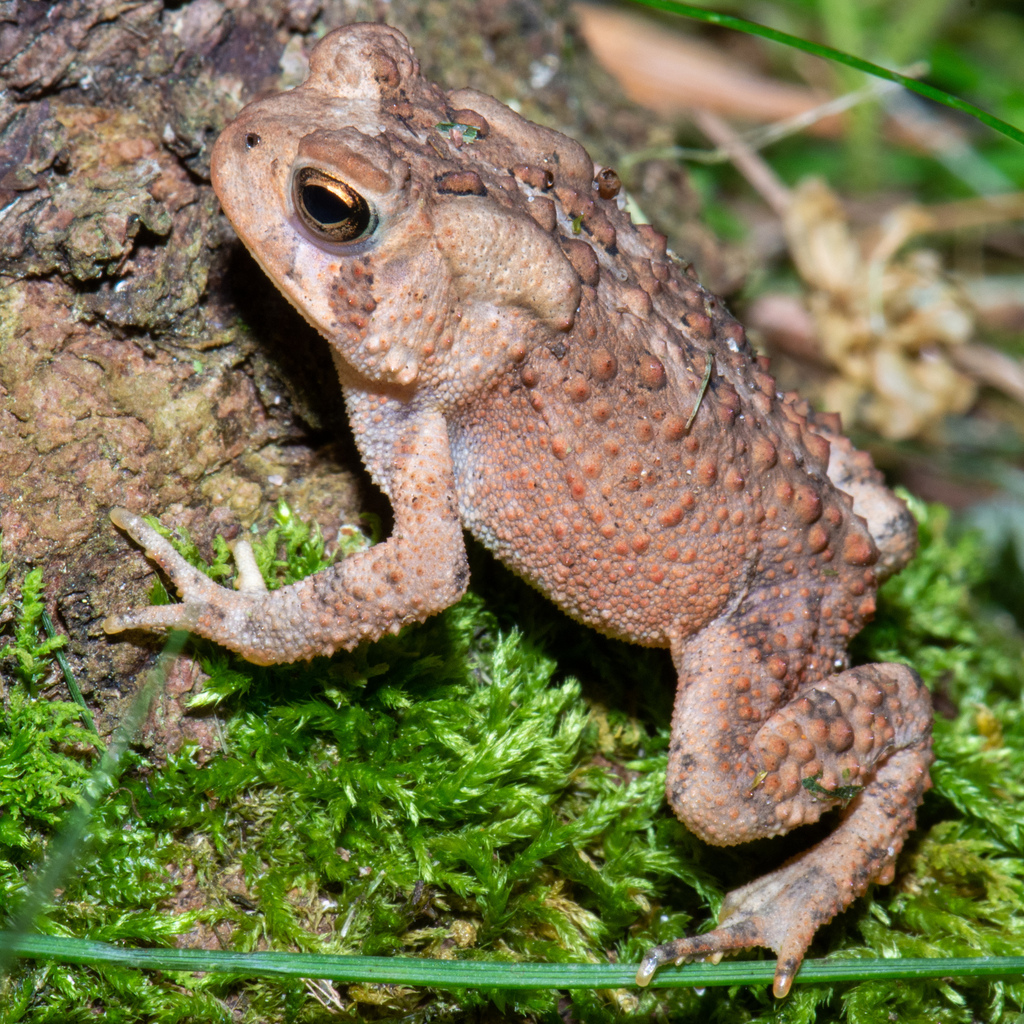
American toad resting among moss and woodland plants
Iron Toad Forge · Field Portal 001

Ohio Toads

Three remarkable amphibians hide in Ohio’s soil, leaf litter, gardens and sandy shorelines. Two are true toads. One is a secretive, toad-shaped outsider.

A pocket field guide

Meet your quiet neighbors.

Toads spend most of their lives on land, but return to shallow water to breed. After dark they hunt insects and other small invertebrates. Their camouflage is so effective that the easiest way to find them is often to listen.

LookNear porch lights, beneath leaves, and along damp paths after rain.
ListenAmerican toads trill. Fowler’s toads cry a nasal “waaaah.” Spadefoots give a short, low call after heavy rain.
ObserveEnjoy wild amphibians where you find them. Clean hands before and after contact, and avoid lotions or chemicals if handling is unavoidable.
Reddish brown American toad on green moss
American toad · photograph by Michael Sulis via iNaturalist
Widespread · Familiar

American toad

Anaxyrus americanus

Ohio’s familiar garden toad is sturdy, variable in color and often marked with a pale stripe down the back. Adults are commonly about 2–3½ inches long.

Voice: a long, musical trill that may continue for many seconds.
  • Usually 1–2 large warts inside each dark back spot; sometimes 3.
  • Dark spots are often clearly outlined.
  • Cranial crests behind the eyes connect to enlarged poison glands.
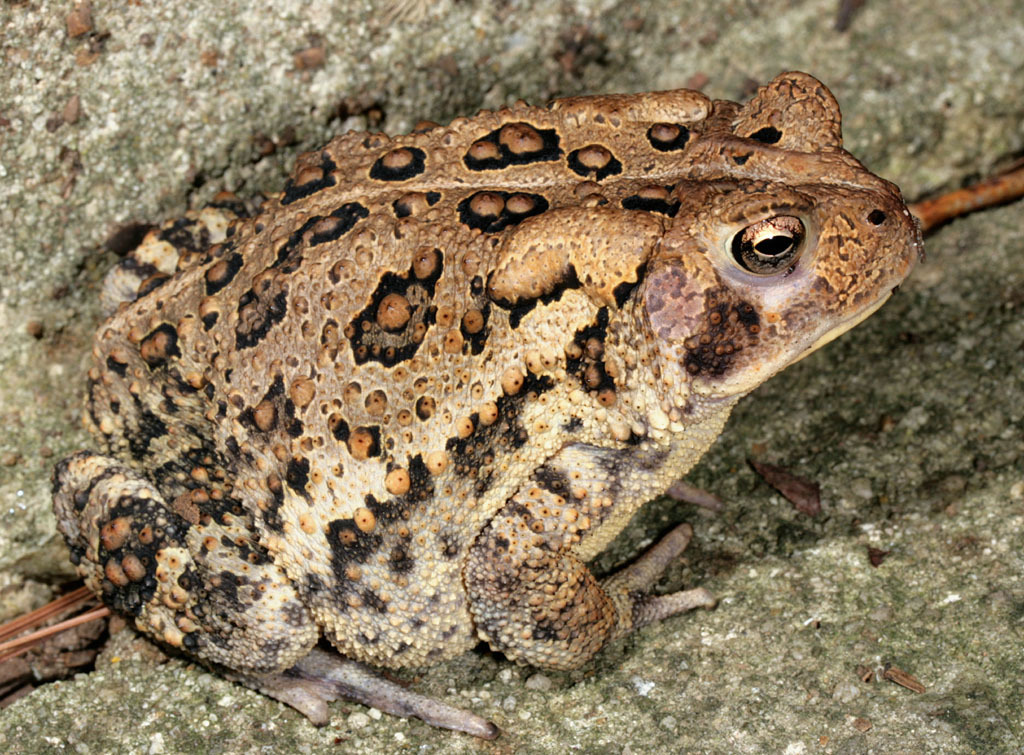
Mottled gray and brown Fowler's toad on rock
Fowler’s toad · photograph via iNaturalist
Sandy ground · River valleys

Fowler’s toad

Anaxyrus fowleri

Fowler’s toad favors loose, sandy soils—especially around floodplains, beaches and river valleys. Its pattern is often finer and busier than the American toad’s.

Voice: a short, nasal, descending wail—often compared with a sheep-like cry.
  • Usually 3 or more small warts inside each dark back spot.
  • Chest and belly are typically pale with little or no spotting.
  • May hybridize with the American toad where their ranges overlap.
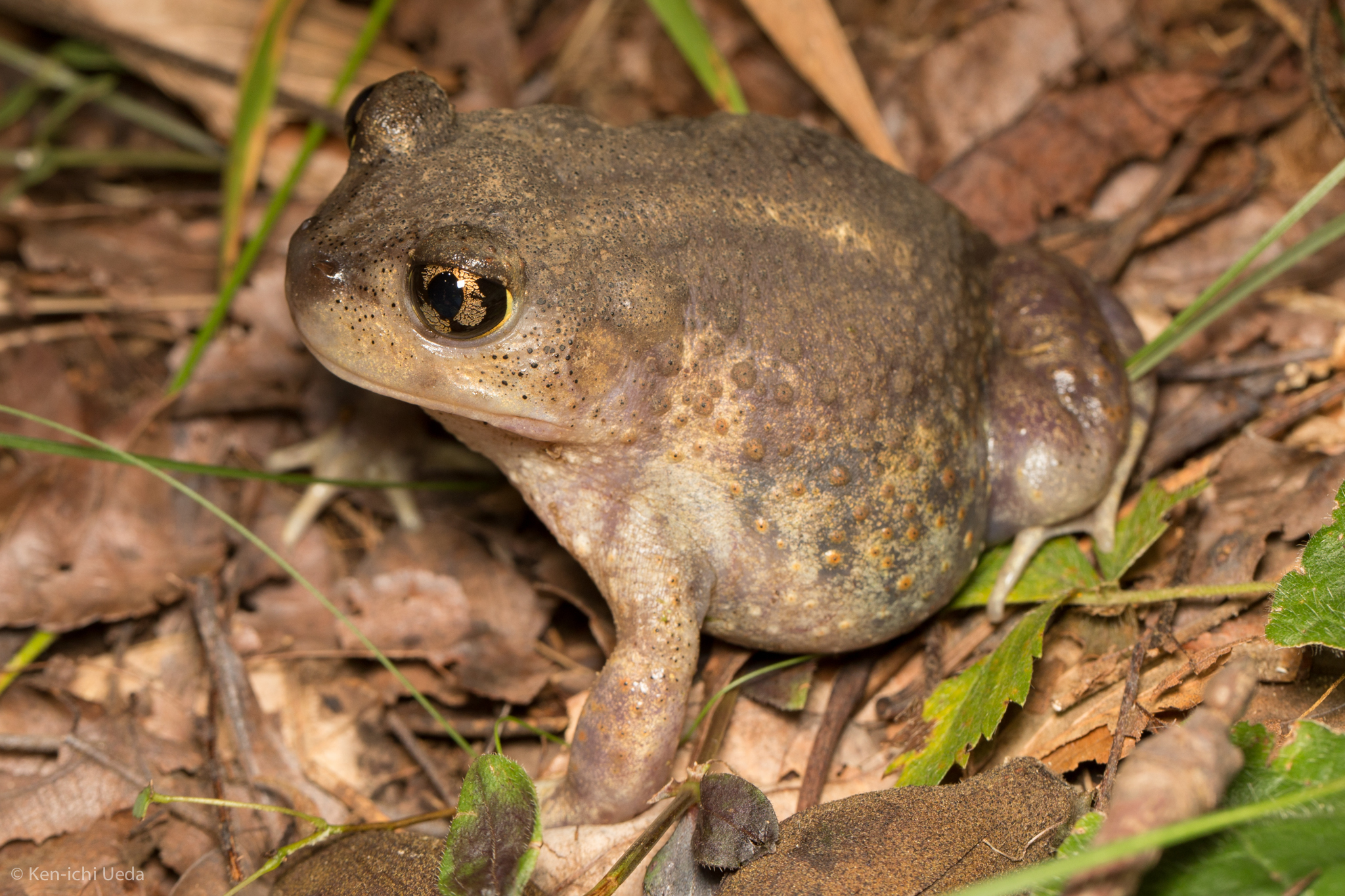
Eastern spadefoot resting among dry grass and leaves
Eastern spadefoot · photograph by Ken-ichi Ueda via iNaturalist, CC BY
Rarely seen · Toad-like

Eastern spadefoot

Scaphiopus holbrookii

Despite its common name, the eastern spadefoot is not a true toad. It spends much of its life underground and may appear suddenly after a warm, heavy rain.

Superpower: a hard, dark “spade” on each hind foot helps it dig backward into loose soil.
  • Smoother skin than a true toad.
  • Vertical, cat-like pupils instead of horizontal pupils.
  • Breeds explosively in temporary pools; tadpoles develop unusually quickly.
Fast identification

One dark spot can tell a story.

1–2 big wartsUsually an American toad.
3+ small wartsUsually a Fowler’s toad.
Vertical pupilAn eastern spadefoot—not a true toad.
Give them a place to live

A toad-friendly yard is pleasantly untidy.

Leave some leaf litter, reduce pesticide use, provide shallow water with an easy exit, and preserve loose, undisturbed soil. Avoid relocating a toad: the safest habitat is usually the one it chose.